Inside the Levine Scholars NOLS Experience: Lessons for Life
Benjamin Dell, Class of 2029
The National Outdoor Leadership School (NOLS) was more than just a month in the woods or a class on the different types of leadership—it was a transformative experience in more ways than one. The expedition combined physical, emotional, and educational challenges paired with self-reflection to create an interactive experience that not only taught me new skills but also changed my perception of myself. The NOLS experience didn’t simply hand me a syllabus and a couple of perfunctory tests. Instead, it sent me into the woods with nine strangers to work together and form a community, grow through failure, lead in an unfamiliar place, and, overall, step out of my comfort zone so I could define who I am.
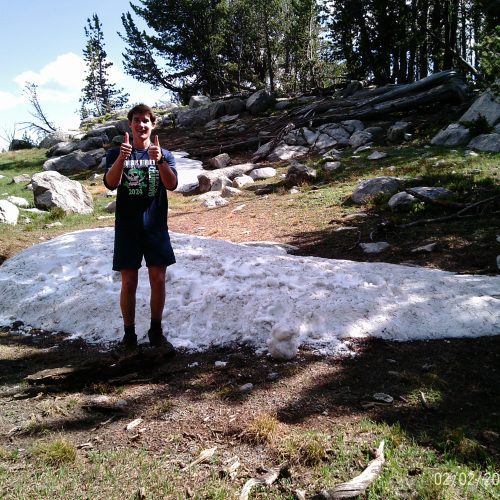
About a week into the trip, we had the opportunity to summit Wind River Peak, not only providing a once-in-a-lifetime experience, but also providing a place where I could really get to know the other people better. Expedition day came around, and Rex, Ryan, and I started the trek to the top. This came with countless challenges: hiking up steep snow walls, traversing boulders, and mapping our way back down. We had to figure it out together, and these shared hardships bonded us closer. Looking back, I realized I had accomplished something great, reaching 13,000 feet, but I did not do it alone, but with my team. Having to adapt to the situations required collaboration, patience, and trust in each other; those bonds have extended beyond NOLS to our first semester of college as we all have begun to step into this new chapter of our lives away from home and pursuing our future goals. The experience at NOLS built the community we needed to equip us for this new challenge we are all facing together.
Second, I learned the importance of learning from my mistakes and not allowing them to make me feel defeated. I have been told throughout my life that I am not the best cook, but I love to try. Coming into NOLS, this was what I was most afraid of, disappointing the team and not being seen as an asset because of my lack of cooking knowledge. On day three, I cooked my first real dinner, ramen, with no assistance. Everything started out going to plan, and I was sure I couldn’t mess it up until I dropped the noodles on the ground, covering them in dirt. Regardless of my critical error, I had to have a meal in 10 minutes, so I cleaned off the noodles and continued on. However, the trouble didn’t end there, trying to help the taste, I added more ingredients – mashed potatoes, butter, chillies, rice, egg, and soy sauce, which I later realized too late was actually vanilla. My fatal mistake made the dish become more of a mush and borderline inedible. I was living my worst fear, and the light whispers critiquing the food became an uproar of how awful it was. This was a turning point for me. I could close off, tell myself I was of no use, and resent my teammates never wanting to cook again, or I could talk to them and figure out how to get better and learn from my mistakes. I took the second path, but this lesson spanned far past this moment, and I realized that mistakes are truly the best tool to learn and grow as a person. Letting yourself get defeated by one wrong ingredient or one troublesome decision will take you nowhere and will only leave you with more struggle. However, taking these mistakes and making them lessons can only improve yourself for the future.
My third and most important lesson came to me in the final days, and it taught me about leadership. I had the opportunity as Leader of the Day (LOD) to be the first group to hike without instructors. This was a lot of pressure, but thankfully, the hike was easy, all on trail and no tough terrain, so my group paid less attention to the maps and walked the path we saw. Feeling confident, we eventually got to the X without realizing it and ended up passing it by half a mile. Everyone knew it wasn’t the exact spot, but I struggled to figure out where we had gone wrong. I scouted, but there was a storm coming in, and I stepped up to find a camp so we didn’t get caught in what I feared would be a dangerous situation. This was the wrong call, and we were directed to the correct spot after setting up camp. At that moment, I felt like I had made the best decision, but it taught me that being a leader isn’t about being the best at everything and always having the answer. Instead, good ethical leaders play to the strengths of their team and have open communication. If I had put this into practice, my team could have had a dialogue about where we were and collectively found where we should have been.
As I look back at the whole of NOLS, I see a success that I am proud of, and I am thankful for every tough moment and challenging day because of all it taught me. Most of the moments when I grew as a person and became better off were when things got hard, and I had to pivot from a mistake or wrong move. I learned that it is in the struggle that growth happens. Along with this, my time at NOLS, especially through these three core lessons, has well equipped me for college, scholar life, and the future in general. As I transition into this new chapter of life, my time creating community has not only given me a support system but also the blueprint on how to meet new people. Learning how serious mistakes are has opened my eyes; when I get a bad grade on a test or fail an assignment, it isn’t truly failure, but a place to regroup and figure out how I can improve. Finally, my leadership lesson has prepared me to practice ethical leadership in my everyday life as I continue to take on leadership roles in clubs and organizations. I am so thankful for all the preparation, the team that supported me, and the unique opportunity that taught me so many lessons.